
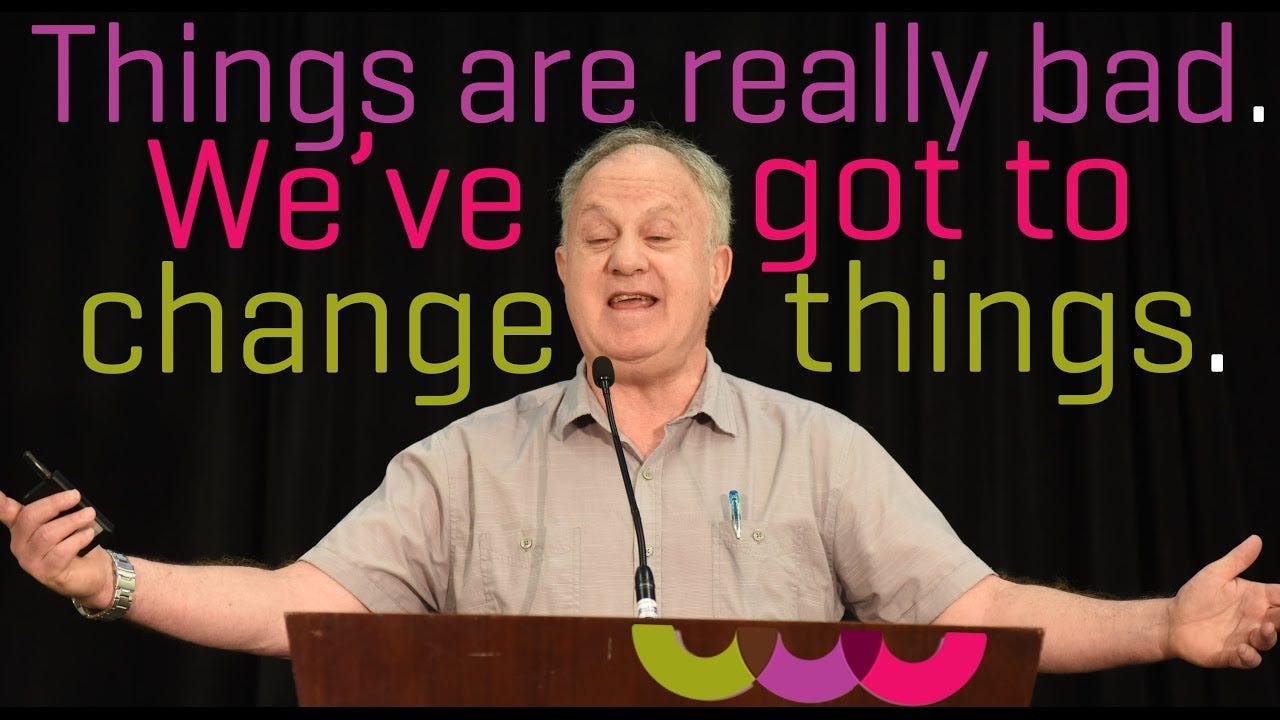
Dennis Raphael, professor of Health Policy and Management at York University Credit: Dennis Raphael
Dennis Raphael, professor of Health Policy and Management at York University, should be a familiar voice to Small Change listeners. Dennis’ research focuses on the political economy of health inequalities.
Today, Dennis is discussing Jane Philpott’s book, Health for All: A Doctor’s Prescription for a Healthier Canada, published by Penguin Random House (2024). Our conversation draws from his lengthy paper, Critical Analysis of Jane Philpott’s Health for All, which listeners can access here.
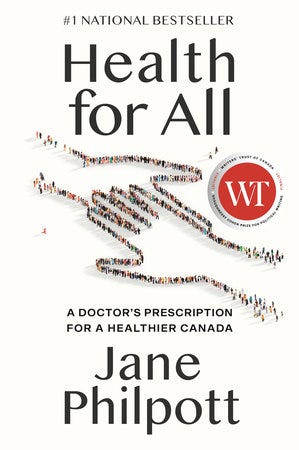
Heath for All: A Doctor’s Prescription For A Healthier Canada by Jane Philpott Credit: Penguin Random House Canada website
Philpott is a physician, academic administrator, and former Liberal Member of Parliament (MP) representing the riding of Markham-Stouffville, ON. Recently, the provincial government tasked Philpott with implementing Ontario’s Primary Care Action Plan, January 2025, with the goal of connecting two million Ontarians to a publicly funded family doctor or primary care team by 2029.
The Ford government claims it is investing $1.8 billion in the plan. But we will have to wait and see whether those tax dollars are invested in public healthcare providers or if it is in fact another Conservative bait and switch where private providers not only directly benefit from the initial $1.8 billion investment, but are also able to overcharge the public healthcare system for their services. Think cataract, knee and hernia surgeries performed in private clinics charging two to three times more than public hospitals receive for performing the exact same operations.
Philpott’s book, Health for All, is described in promotional materials as, “An Instant #1 National Bestseller from one of Canada’s most respected and high-profile health professionals (and former federal Minister of Health), a timely, practical, ambitious, and deeply personal call for action on health that sets out the roadmap to our future well-being. Jane Philpott has spent her life learning what makes people sick and what keeps people well. She has witnessed miracles in modern medicine. She has also watched children die of starvation in a world that has plenty of food. With Health for All, she sounds a clarion call for a radical disruption in a health care system that is broken—but not beyond repair. The vision is rooted in a deep-seated commitment to health equity.”
Dennis explains why he wrote such a lengthy and detailed review that includes three pages of references. We discuss his main criticisms of the book as well as the healthcare issues that were ignored and the impact that has on readers’ understanding of the healthcare crisis.
Dennis devotes a good chunk of his review to critiquing Philpott’s lauding of Paul Martin Jr, Canada’s 21st prime minister who was a Liberal and a lawyer. In fact, Dennis observed, “[Philpott] also states that Paul Martin Jr. in 2004 was one of the few politicians since 1970 willing to fundamentally improve health services in Canada. What goes unmentioned is that Paul Martin Jr. was the primary architect of the shredding of the Canadian welfare state in the early 90s (Scarth, 2004). As finance minister committed to eliminating the deficit, he reduced public spending to 1950’s levels, profoundly shrinking the public programs that supported many of the individuals Philpott states as not being able to have their voices heard.”
Dennis discusses the obvious cognitive disconnect between Philpott’s praise of Martin, his slashing of social safety nets and the impact his austerity policies had on public healthcare.
We also consider why Philpott wrote such a vacuous volume and the lessons that Canadians can take away from her book.
Then, we turn our attention to addressing whether Philpott is actually the person to solve Ontario’s primary care crisis and if the Ford government’s Primary Care Action Plan, January 2025 is even the solution.
Dennis and I circle back to one of our favourite social justice poets and playwrights, Bertolt Brecht. We turn to Dennis’ recently published article about Brecht’s poem, A Worker’s Speech to a Doctor, in which the worker placed his sickness within the framework of existing political and economic structures. Dennis thoughtfully discusses how his analysis of this poem provides insights into Philpott and her motivations for writing her book.
I also ask Dennis what immediate steps he would take to improve Canada’s universal healthcare system if he were able to wave a magic wand to implement those essential changes.
This is a podcast that every Canadian with an interest and stake in publicly funded universal healthcare should listen to. And, if you don’t fall within the top ten per cent income bracket, then you really need to listen up and take action before it’s too late.
I encourage listeners to check out and join Ontario Health Coalition (OHC) here. Until January 16, 2026, at 4:41 p.m. (EDT) you can sign and share Liberal MP Nathaniel Erskine-Smith’s Federal petition calling for the Government of Canada to enforce the Canada Health Act in Ontario here .
Read Dennis Raphael’s Critical Analysis of Jane Philpott’s Health for All here.
Karodia, H., MacGregor, W. and Raphael, D. Evoking Brecht’s A Worker’s Speech to a Doctor: developing clinical skills, deepening understanding and promoting action on living and working conditions, or mobilisation for system reform or transformation? (2025) Med Humanities.
Suthakaran, K. and Raphael, D. (2025). Canada and the three public policy taboos: Promoting health equity in difficult times. Critical Studies.
Raphael, D., Bryant, T. and Amin, R. (2025). Promoting health equity in an era of growing contradictions between capital accumulation and social reproduction in capitalist economies. Community Health Equity Research and Policy.
Raphael, D., Bryant, T., Mikkonen, J. and Raphael, A. (2020). Social determinants of health: The Canadian facts, 2nd edition. Oshawa: Ontario Tech University Faculty of Health Sciences and Toronto: York University School of Health Policy and Management.
Second Opinion: What’s Wrong with Canada’s Health-Care System and How to Fix It by Michael Rachlis and Carol Kushner, the 1989 book analyzes and critiques Canada’s healthcare system.
Hell and High Water: An Assessment of Paul Martin’s Record and Implications for the Future, Todd Scarth (Editor), April 26, 2004. Canadian Centre for Policy Alternatives.
Jane Philpott’s book, Health for All: A Doctor’s Prescription for a Healthier Canada
Thanks to everyone who read today’s article and listened to my podcast. With your financial support, a little Nicoll can make a lot of change.
You can also find my work on Public Parking Publication, herizons, rabble.ca and my Wix site. Follow me on Instagram, X @doreennicoll61, Bluesky @nicollneedschange and Facebook.
Music: Real Estate by UNIVERSFIELD is licensed under a Attribution 4.0 International License. freemusicarchive.org.
*Be sure to download the Substack app to get the most from your podcast experience.


